
Last updated November 4, 2026
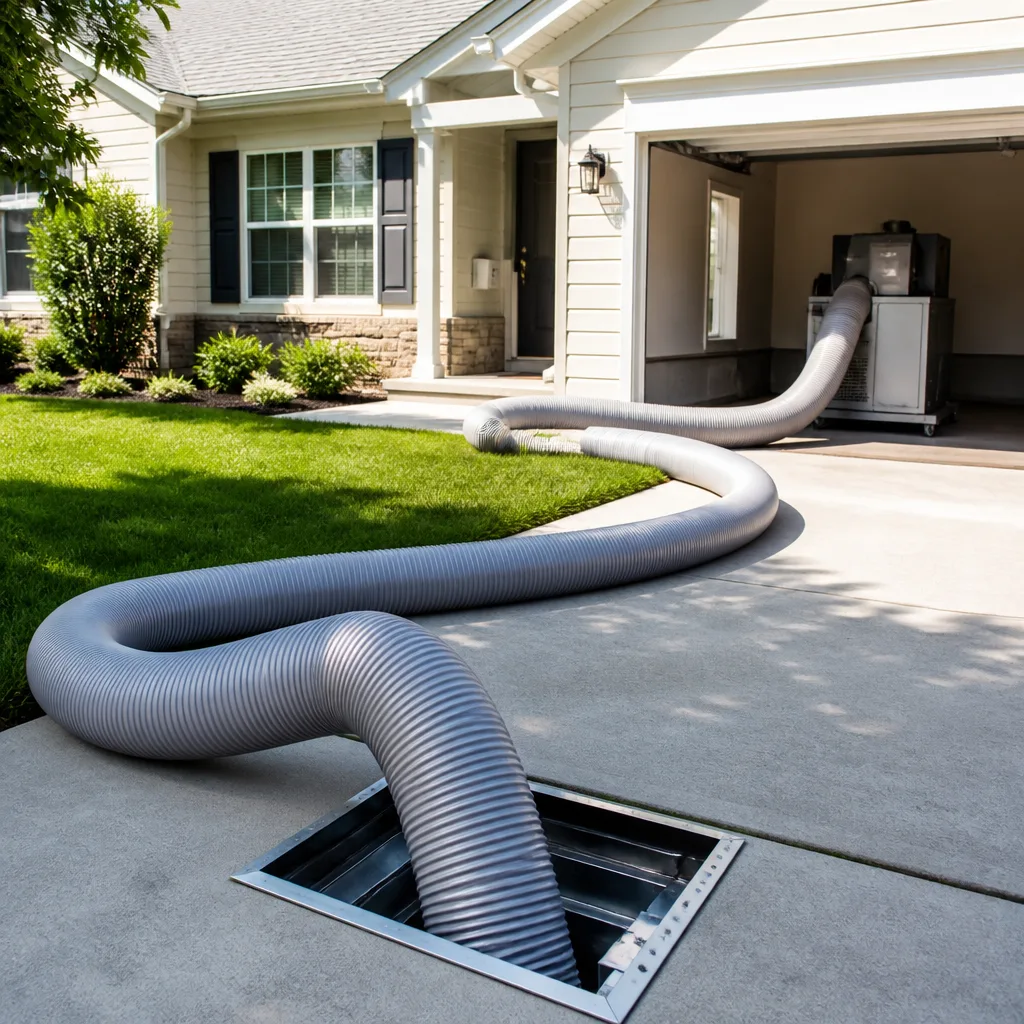 Whole-home duct cleaning
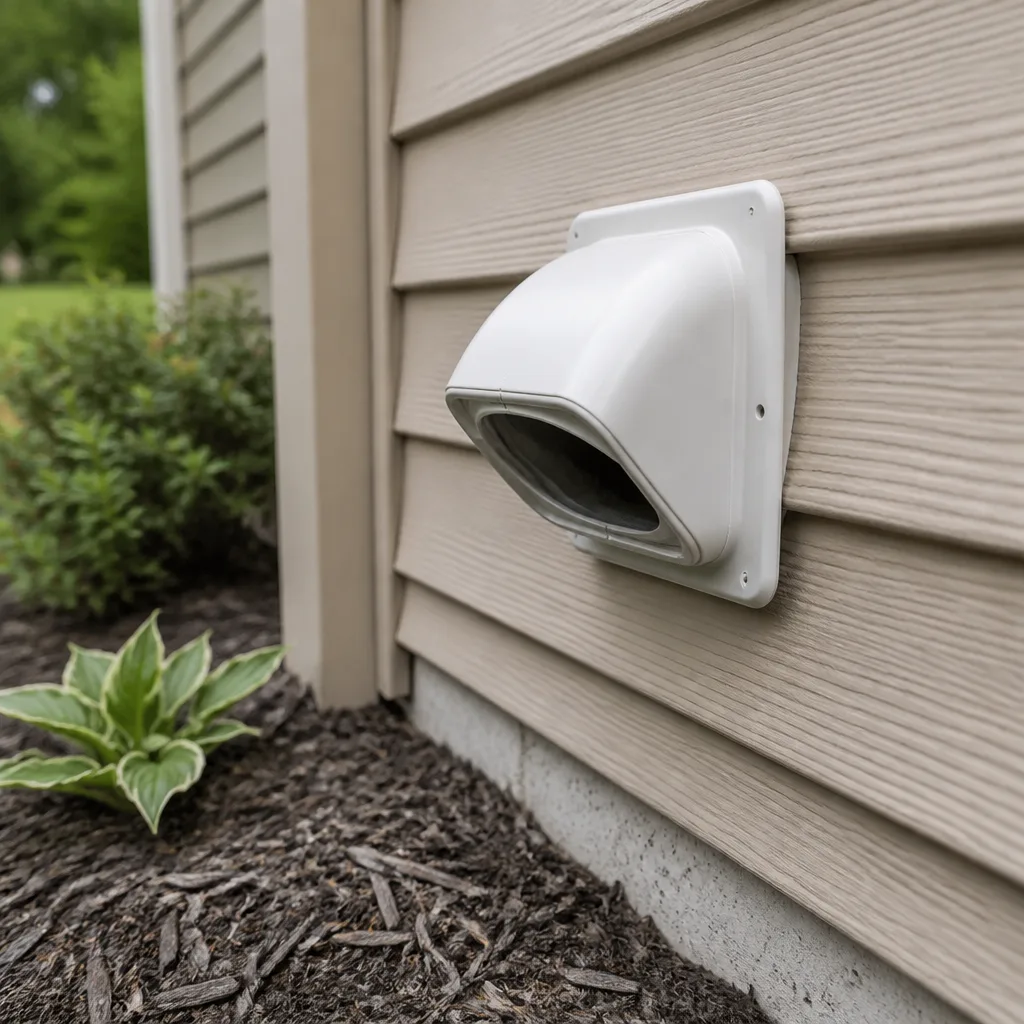 Dryer vent cleaning
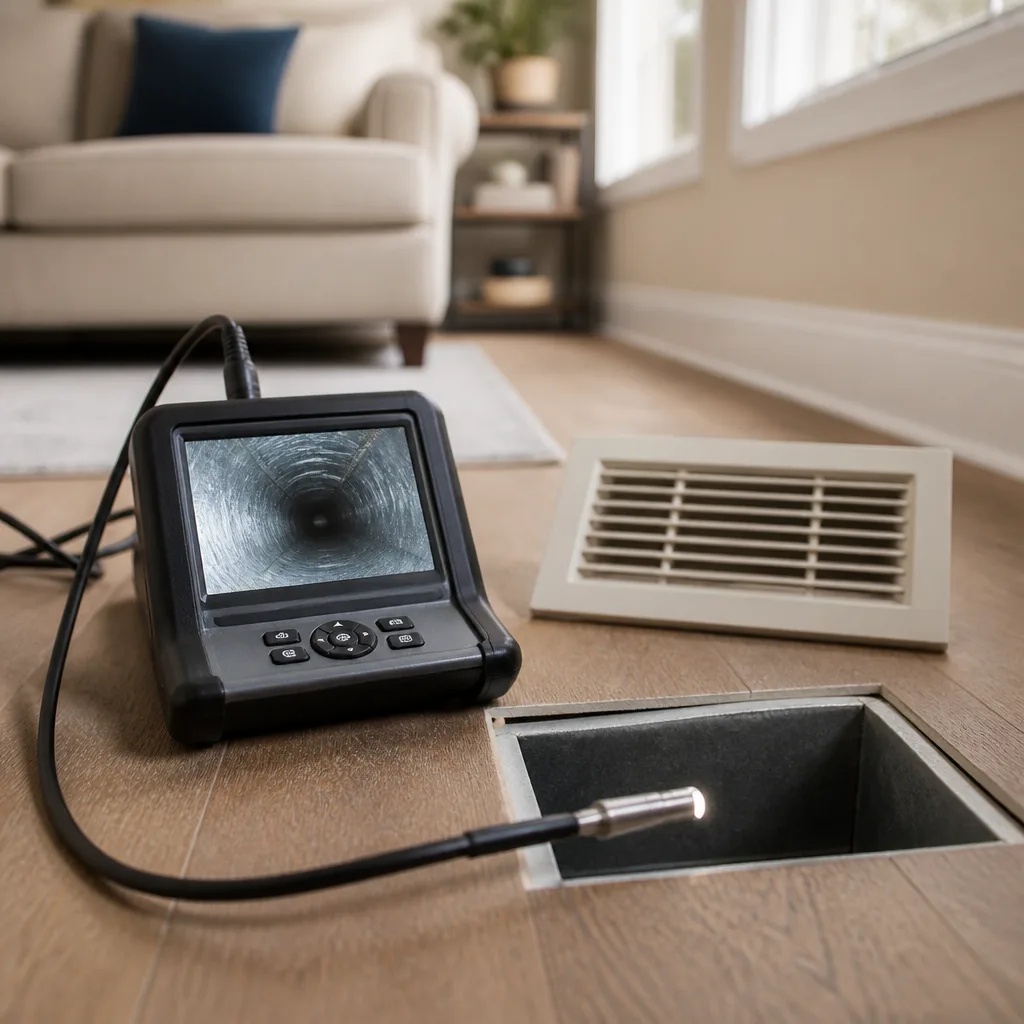 Camera inspection
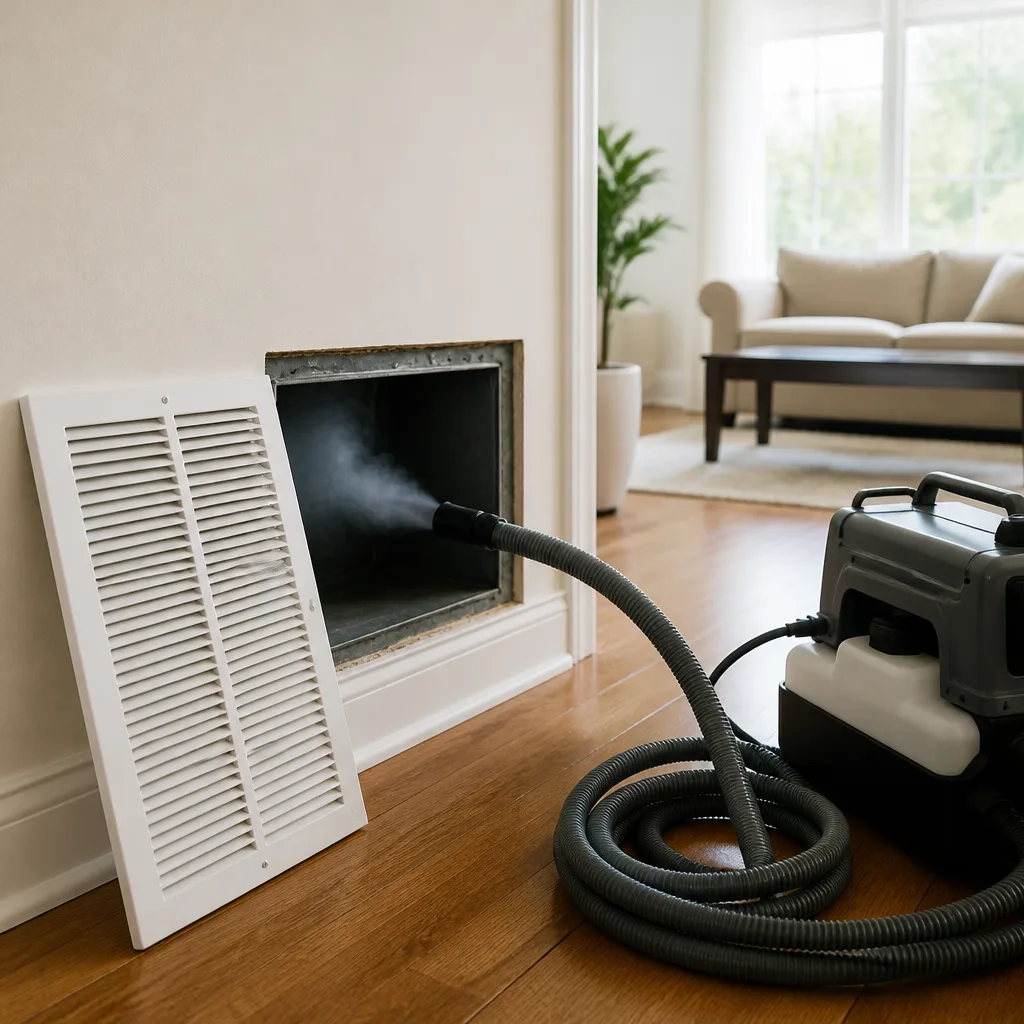 Sanitizing & deodorizing
Whole-system duct and dryer vent check with before-and-after photos - you see exactly what came out of your vents
That "$99 whole-house special" is a bait ad - the real number appears once they are in your hallway, or the "clean" is a shop-vac at the register. We photograph the inside of your ducts before and after instead.
Air Duct Cleaning Emergency Preparedness Guide for North Hollywood Homes
Most North Hollywood homeowners think about air ducts the same way they think about plumbing: invisible until something goes wrong. But in a valley community positioned within range of wildfire smoke corridors and built on active seismic geology, what lives inside your ductwork becomes a recovery variable after disaster, not just a maintenance item. This guide walks through what happens to your ventilation system during environmental emergencies, what to do in the first 48 hours, and how to prepare your ducts before the next smoke event or earthquake arrives. You’ll learn what contaminants actually enter a system, why timing matters, and how to document everything for insurance. The goal is simple: when the air outside goes bad, your ducts shouldn’t make the air inside worse.
Quick Answer
Air duct cleaning after an environmental emergency in North Hollywood, whether wildfire smoke or an earthquake that disturbs attic and crawlspace particulate, should be treated as structural cleanup, not routine maintenance. Shut your HVAC system down during active smoke events to prevent particle deposition inside ductwork, schedule a professional post-event assessment within two to four weeks to catch contamination before it bonds to duct lining, and document your system with pre- and post-event photos for insurance claims. A contractor using Rotobrush contact-cleaning and Nikro HEPA vacuum equipment can remove what a shop-vac crew leaves behind.
Styles & brands we work with
- Whole-home duct cleaning
- Dryer vent cleaning
- Camera inspection
- Sanitizing & deodorizing
Table of Contents
- When to Shut Down Your HVAC During a Smoke Event
- What Wildfire Smoke Actually Deposits in Ducts
- Earthquake Preparedness for Duct Systems
- Post-Event Duct Assessment Protocol
- Emergency Cleaning Timeline: Why Speed Matters
- Documenting Duct Condition for Insurance Claims
- Filtration Upgrades That Make Sense in North Hollywood
When to Shut Down Your HVAC During a Smoke Event
The first instinct during a smoke event is to close all windows and crank the air conditioning. And yes, for temperature control, that is the right move. But for your ductwork, there is a critical distinction between recirculation mode and pulling outside air. If your system is pulling outside air through a fresh-air intake, every hour it runs during a smoke event deposits fine particulate across the entire duct interior. The system becomes a smoke deposition chamber.
Here is the protocol we recommend for North Hollywood homes when air quality drops:
- Check your AQI before relying on HVAC. If the index is above 150, treat outside air as contaminated. Don’t assume running the system makes indoor air cleaner; it only does so if filtration is already adequate.
- Switch the system to recirculation mode if equipped. Recirculation means no fresh-air intake pulling smoke inside. If your thermostat has a “fan only” option, it may still pull from outside depending on the setup, so know your system before the event.
- Upgrade the filter before smoke season, not during. A MERV 13 or higher filter rated for smoke particulate needs to be in place before you need it. During an active event, you should not be driving to a hardware store.
- Consider shutting the system down entirely during peak smoke hours. When outdoor particulate is at its worst, sometimes the cleanest air is still air. The less your system circulates contaminated air, the less deposition you face.
Running a system during smoke doesn’t just coat the duct walls. It forces particles into the blower motor, the evaporator coil, and the return plenum. That contamination doesn’t leave on its own. North Hollywood’s valley geography traps smoke longer than many parts of Los Angeles County, which means your system can run in degraded air for days, not hours. By the time the sky clears, your ducts may hold weeks of particulate that every future cycle re-aerosolizes back into living spaces.
What Wildfire Smoke Actually Deposits in Ducts
Wildfire smoke is not one contaminant. It is a complex mixture that changes composition depending on what burned, how hot the fire was, and how far the smoke traveled. By the time it reaches North Hollywood from regional fire corridors, the smoke carries fine particulates, partially burned carbon, volatile organic compounds, and often trace metals from burned structures. Your duct system becomes a collection point for all of it.
The contaminants that concern us most in post-smoke duct assessments:
- PM2.5 and PM10 particulate. Particles under 2.5 microns penetrate deep into lung tissue and also settle readily into duct interiors. A HEPA vacuum rated to capture down to 0.3 microns, like the Nikro platforms we run during air duct cleaning work, is designed to remove what standard filtration leaves behind.
- VOC absorption into duct lining. Some duct systems use fiberglass or acoustic lining. That material has microscopic pores that absorb smoke odor and chemical compounds. Surface cleaning alone won’t address what has absorbed into the lining itself.
- Ash particle distribution. Ash is heavier than fine smoke and tends to settle at the bottom of return ducts and around registers. It doesn’t stay there indefinitely; airflow redisburses it whenever the fan runs.
- Carbon and soot film. Even low smoke exposure creates a thin film along duct walls. That film is sticky and bonds with whatever else lands on it, making later removal harder.
The misconception is that closed windows protect a home. They reduce large particulate entry, but the HVAC system itself can pull smoke through gaps in the return system, especially in older valley homes with unsealed duct joints. Once inside, every cycle distributes the contamination further. That is why we treat post-smoke dryer vent cleaning and duct assessment as related issues: both pathways move air from inside the home to outside, and both hold what the other misses.
Earthquake Preparedness for Duct Systems
North Hollywood sits in a seismically active region, and while we do not get the freeze-thaw cycle that damages ductwork in colder climates, we absolutely get the shaking that dislodges it. An earthquake does not need to crack walls to compromise your ventilation. Even moderate shaking can separate duct connections, unseat registers, disturb attic insulation, and introduce settled particulate into the airflow path.
Here is what an earthquake can do to a duct system:
- Dislodge duct connections. Duct sections are often joined with tape, mastic, and mechanical fasteners. Shaking works those connections loose, creating gaps where unconditioned attic or crawlspace air enters the system.
- Disturb attic insulation. Valley homes frequently run ducts through hot attics. Shaking can knock blown-in insulation onto duct runs, and if joints are already loose, that insulation gets pulled into the airflow.
- Introduce stored particulate. Ducts that haven’t been cleaned in years hold settled dust, dander, and debris. The vibration of an earthquake sends that material airborne inside the system, where it redistributes throughout the home.
- Separate return plenums. The return side is under negative pressure. A separated return joint pulls whatever is around it into the system, including drywall dust from cracked walls.
The preparedness angle is not about duct cleaning stopping earthquake damage. It’s about knowing that a cleaned and well-sealed duct system is easier to assess after an event. If your system is already compromised before the shaking starts, you have larger problems after. We approach earthquake-related duct work the same way we approach smoke recovery: inspect first, document everything, and fix what is actually broken rather than cleaning around it. That repair capability matters. Competitors can clean what is in your ducts; Onyx Duct Cleaning can also repair what is wrong with them.
Post-Event Duct Assessment Protocol
After a significant smoke event or earthquake, a professional duct assessment should cover specific failure points that a visual walkthrough misses. This is not a five-minute look at a register. A defensible assessment includes:
- Supply and return pressurization check. Air loss anywhere means contamination entry somewhere. A basic static pressure test reveals whether your system is leaking beyond acceptable limits.
- Visual inspection of the coil and blower cabinet. The coil is downstream of the filter and upstream of the supply ducts. If the coil is coated with smoke particulate, the ducts downstream received the same load.
- Duct interior inspection at multiple access points. This includes the return drop, the supply plenum, and at least two branch runs. What you see at one register does not represent the whole system.
- Assessment of duct lining condition. Fiberglass or acoustic lining that absorbed smoke odor or VOCs may need replacement rather than cleaning. That is a repair decision, not a cleaning decision.
- Check for particulate in the blower assembly. The blower wheel collects fine dust and smoke residue over time. If the blower is dirty, the system is circulating what it has already collected.
For North Hollywood homes specifically, we look for evidence of smoke intrusion through return pathways in older construction, where chases and wall cavities serve as unintentional return plenums. Those pathways cannot be cleaned with a brush and vacuum alone. They require an understanding of how the home is actually built, which only comes from working repeatedly in the same market. Our familiarity with North Hollywood housing stock, from Toluca Lake adjacent to the south to Valley Village to the west, means we know which construction eras present which ventilation vulnerabilities.
Emergency Cleaning Timeline: Why Speed Matters
If contamination sits in a duct system long enough, it stops being loose particulate and starts becoming adhered film. The window for easier removal varies by contaminant type and system conditions, but the principle holds: the sooner you clean, the more complete the results.
Here is the practical timeline we recommend:
- Within 7 days of a major smoke event: Change your HVAC filter, even if it doesn’t look dirty. Smoke clogs filter media faster than visible dust suggests. If you have a MERV 13 or higher filter installed, replace it. This buys you time on the rest of the system.
- Within 14 to 30 days: Schedule a professional duct assessment. You want to know what entered the system and where. If contamination is light and the system was recently cleaned, a filter change and careful monitoring may be sufficient. If contamination is significant, cleaning should follow.
- After an earthquake that visibly damaged ceilings, walls, or attic areas: Do not run the system until it has been inspected. Drywall dust is abrasive and fine. It will enter every gap in the return path and coat the blower.
- If anyone in the home has respiratory sensitivity: Shorten the assessment window. Smoke particulate in ducts re-aerosolizes every time the fan cycles. The health exposure is cumulative, not one-time.
The reason speed matters is physics. Fresh smoke particulate is dry and loose. It brushes and vacuums out. Aged smoke particulate, especially after exposure to humidity cycles or temperature swings, bonds to duct surfaces and requires aggressive mechanical cleaning. Rotobrush contact-cleaning systems are built for exactly that: dislodging adhered debris at the duct wall rather than simply agitating what is loose. The same equipment restoration crews trust for post-disaster cleanup is what we run in North Hollywood homes every week.
Documenting Duct Condition for Insurance Claims
Most homeowners lose insurance reimbursement for duct cleaning because they cannot prove what the ducts looked like before the event. An adjuster reviewing a claim needs a before-and-after story. Without documentation, you are asking for payment on a system whose condition is unknowable.
What to document before any emergency event:
- Date-stamped photos of the indoor side of supply registers and return grilles. These show baseline condition. You do not need to remove registers if you document the visible surfaces consistently.
- The date and service details of your most recent duct cleaning. If you had the system cleaned in the last two years, that receipt is evidence that severe contamination discovered after an event is causally related to the event, not to decades of neglect.
- Filter type and replacement schedule. Show you maintained the system. Insurers look for contributory negligence; a clogged filter bolsters their argument.
What to document after an emergency event:
- Date-stamped photos of the same registers and grilles from the same angles. Visible ash film, soot, or debris changes the claim conversation entirely.
- Photos of any new gaps, disconnected duct sections, or visible insulation intrusion in the attic. Earthquake claims require evidence of physical displacement.
- The professional assessment report from your duct contractor. Ask for written findings, not just a verbal summary. The report should describe contamination type, location, and recommended action.
- Any filter media retained from post-event replacement. A filter that is visibly black from smoke particulate is evidence of what passed through the system.
We have seen insurance adjusters approve duct cleaning claims when the documentation is complete and deny identical claims when it is not. The documentation does the arguing for you. Write it down, photograph it, and keep the files somewhere accessible. Your future claim depends on what you record today.
Filtration Upgrades That Make Sense in North Hollywood
The right filtration setup for a valley home facing wildfire smoke is not a single product. It is a systems decision that accounts for your ductwork condition, your HVAC capacity, and the specific contaminants you are defending against. North Hollywood homes range from 1950s ranch construction to newer infill, and what works in one will not work in another.
Here is how we think about filtration for this market:
- Higher MERV is not always better. A MERV 13 or higher filter captures more smoke particulate, but it also increases static pressure. If your blower was not designed for that resistance, you trade filtration for airflow and blower motor strain. This is a balance, not a race to the highest number.
- AprilAire media cabinets make sense for homes that want high-MERV filtration without constant filter swaps. A media cabinet with a deep pleat can hold a MERV 13 or higher filter for months longer than a one-inch panel. It is an upfront cost but a long-term solution for smoke-prone seasons.
- Honeywell whole-home systems integrate with existing control setups. For homeowners who want to see what their filter is doing, Honeywell’s ecosystem gives you thermostat-level visibility into filter life and system demand. Understanding filtration as a whole system, not just a duct interior, is why we work across these brand platforms.
- Standalone HEPA units help, but they do not replace duct-level protection. A room air purifier cleans the room it sits in. It does not clean what has already deposited in your ducts. Treat both pathways or accept partial protection.
For post-event recovery, Abatement Technologies filtration equipment signals the standard that matters: containment. When we run HEPA vacuum systems during air duct cleaning in North Hollywood, the goal is not to move contamination from the ducts into the living room. It is to capture and contain it. That same logic applies to filtration upgrades. You want a system that contains contamination at the point of entry and removal, not one that recirculates it with enthusiasm.
Common Mistakes to Avoid
- Running the HVAC during peak smoke and hoping the filter catches everything. A standard one-inch filter catches large dust, not fine smoke particulate. Running the system deposits what it does not catch across your entire duct network.
- Waiting months after a smoke event to schedule a duct assessment. The longer smoke residue sits, the more it bonds to duct surfaces. What was cleanable in week two is a harder removal job in month three.
- Cleaning only the supply ducts and ignoring the return side. Both paths carry the same contamination. A contractor who only cleans what is visible at the register is leaving the return system untouched, and that air cycles back through the home.
- Photographing registers without a consistent angle or date stamp. An adjuster will not accept a random photo without metadata. If you are documenting for insurance, be systematic.
- Assuming the filter protected the system during a smoke event. The filter protects the coil and blower from large debris. It does not protect the supply ducts from fine particulate that passes through the media. The ducts are downstream of the filter; what gets through gets deposited.
- Hiring the low-bid duct company without asking what equipment they run. A shop vac connected to a rotating brush cannot capture what a HEPA vacuum rated to 0.3 microns can. The difference is whether the contamination is removed or just relocated.
- Running the system after an earthquake without checking for disconnected ducts. A separated return joint pulls attic insulation directly into the blower. Every cycle makes the problem worse and the repair more involved.
See the difference
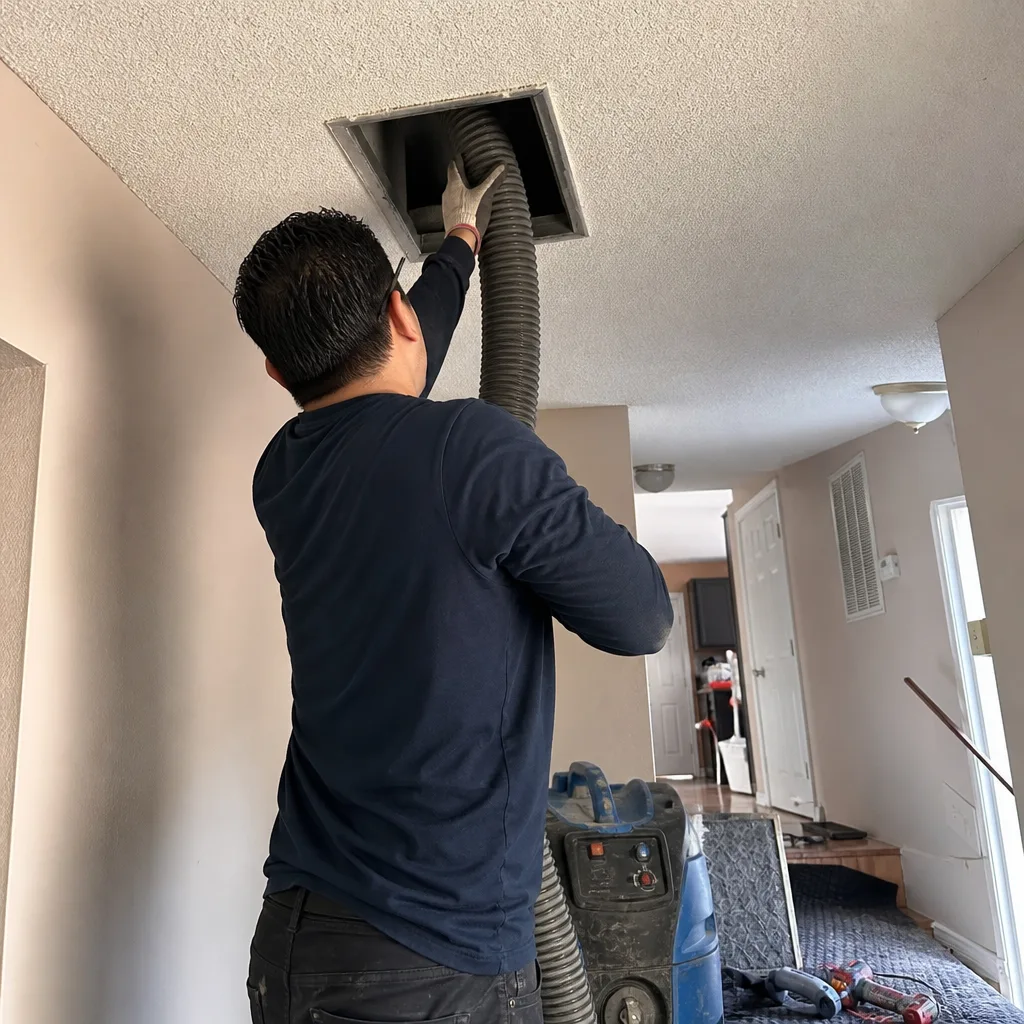 Before
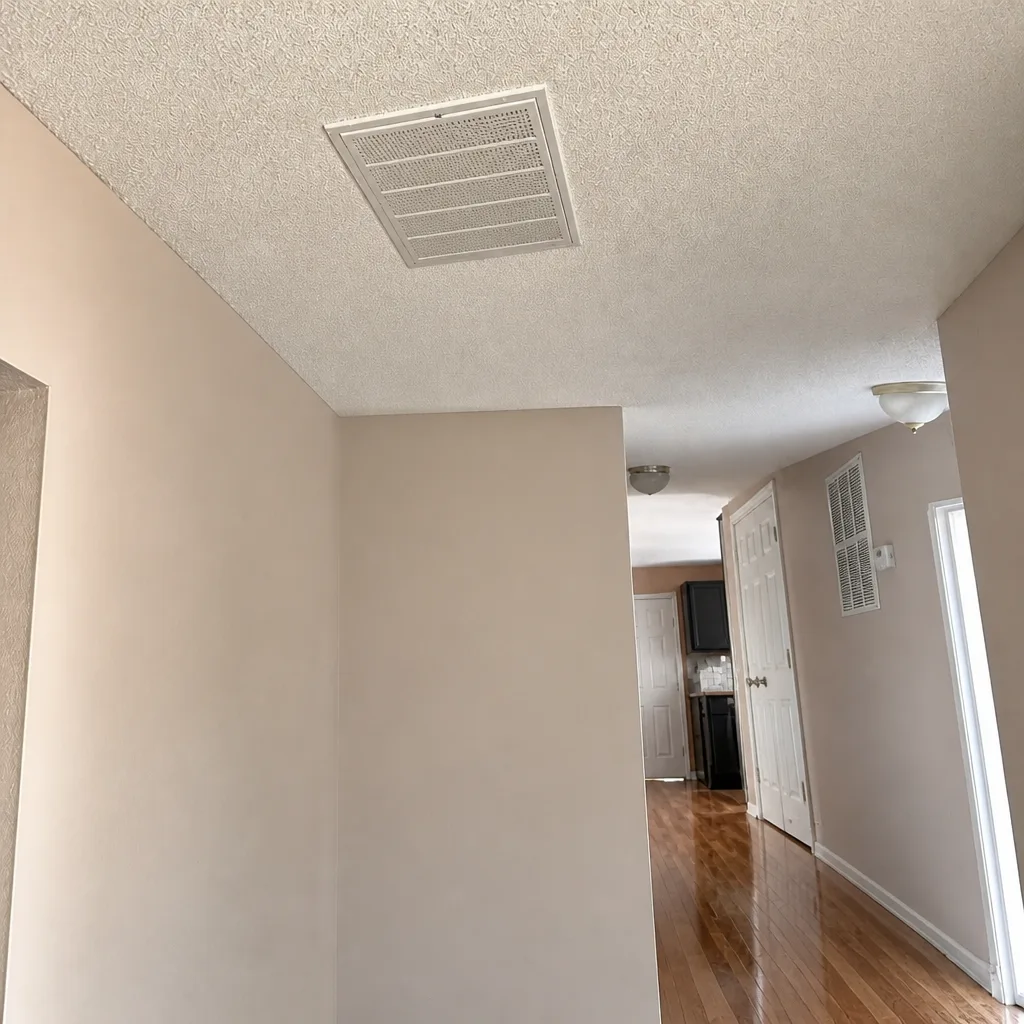 After
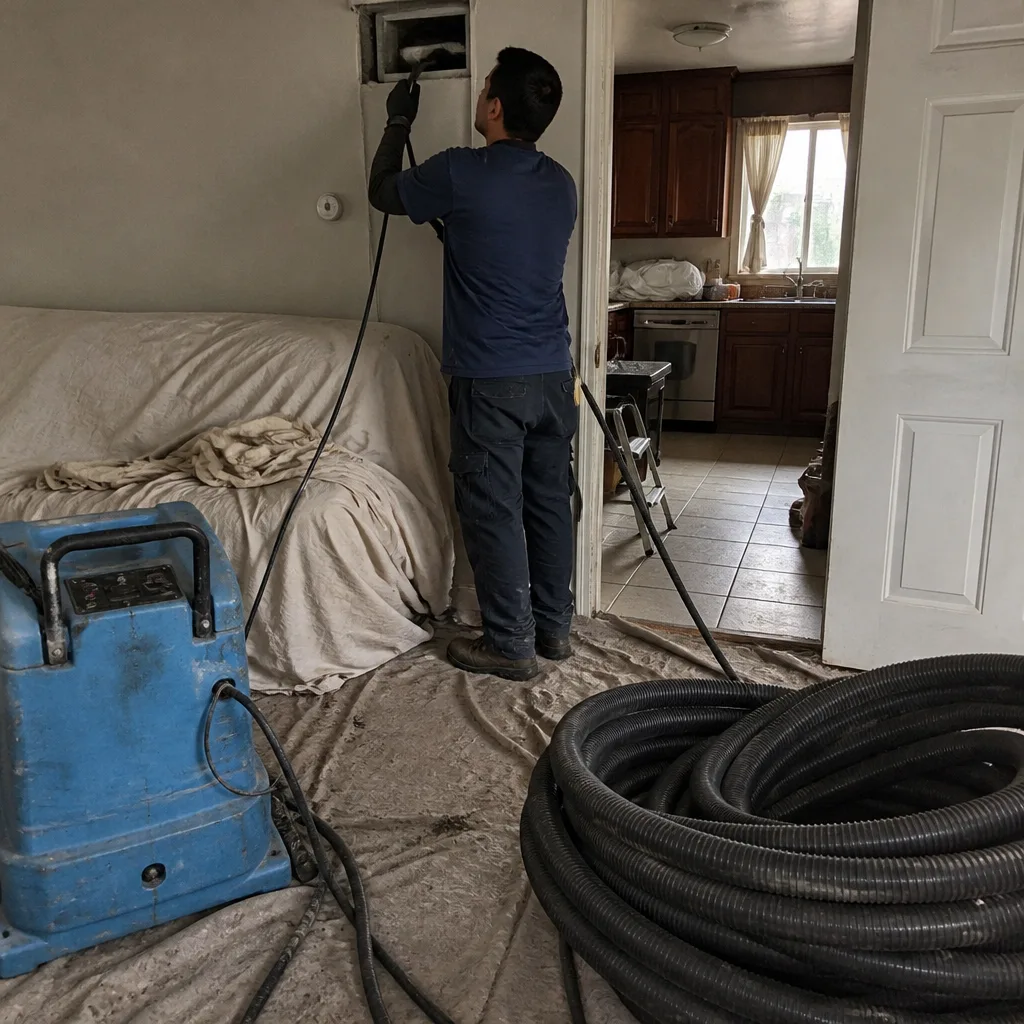 Before
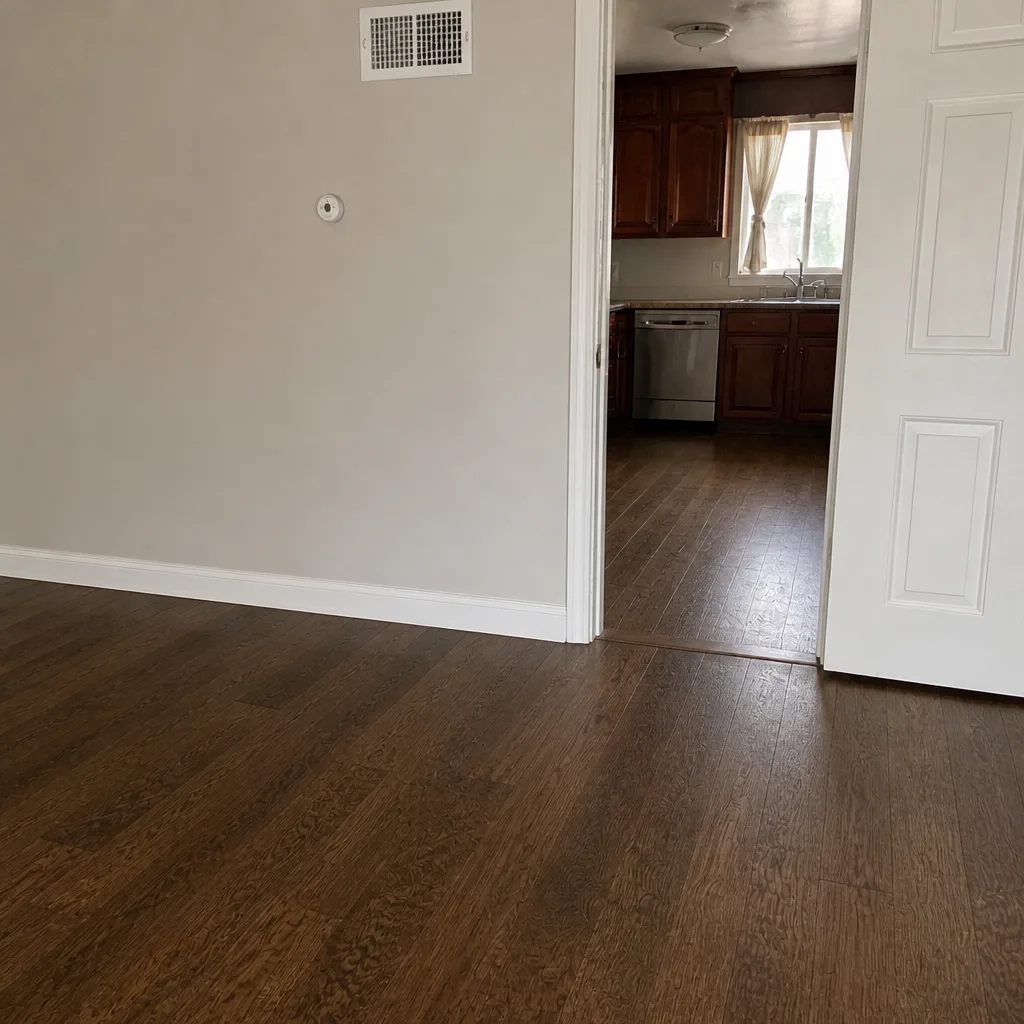 After
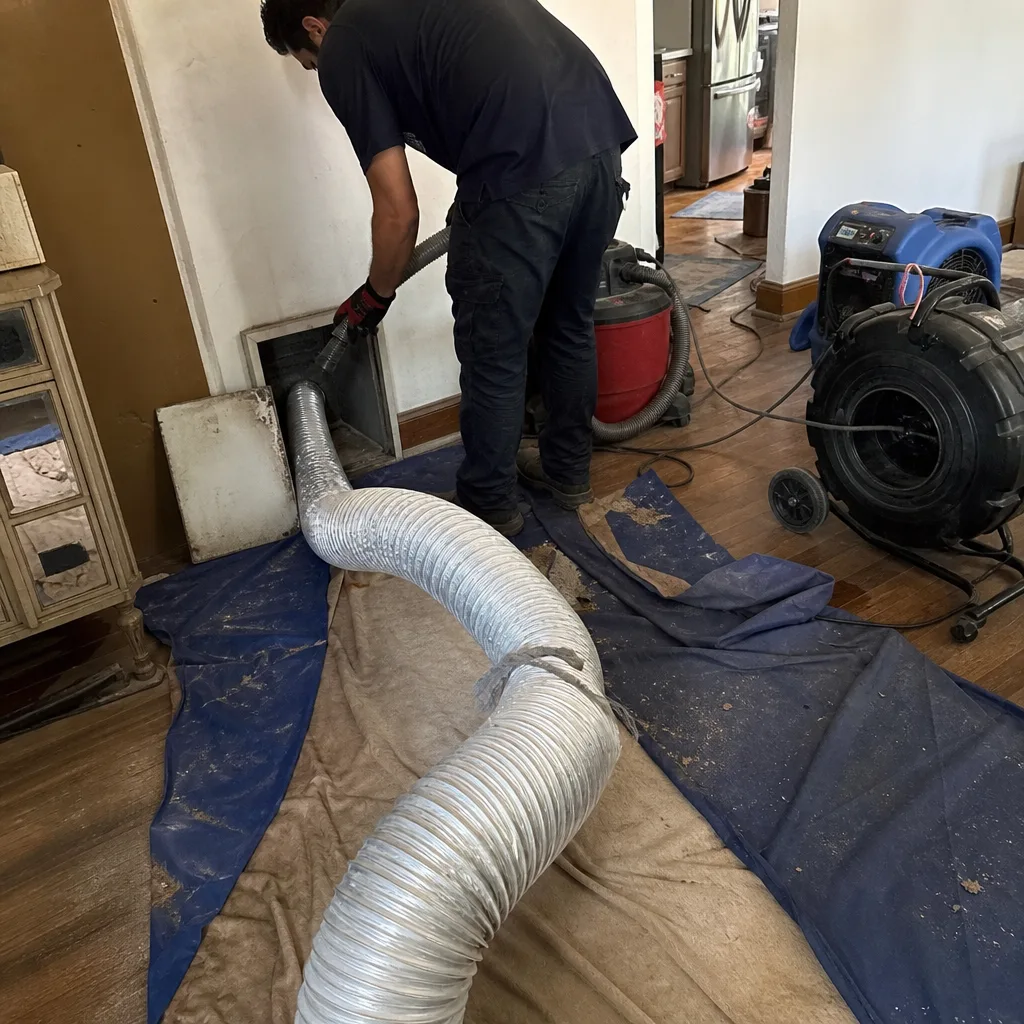 Before
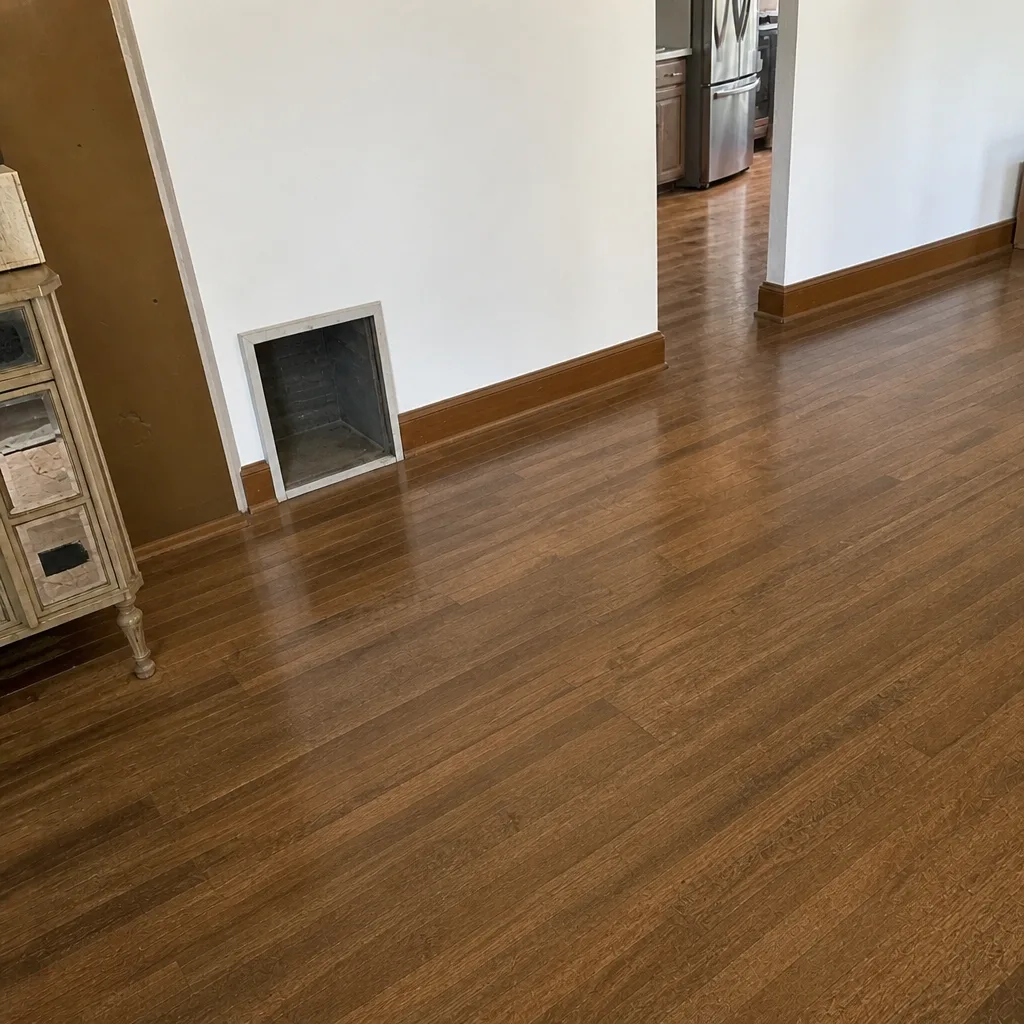 After
When to Call a Professional
Call a professional when the event was significant enough to change what lives inside your ducts. That means after any wildfire smoke event where the AQI exceeded 150 for more than a day, after any earthquake that cracked drywall, disturbed attic insulation, or visibly shifted anything in the home, and after any renovation that generated heavy dust while the system was running. You should also call when anyone in the home develops unexplained respiratory symptoms that worsen when the HVAC runs, or when you see visible dust discharge from supply registers. Onyx Duct Cleaning offers free estimates in North Hollywood, and our team can assess what entered your system, what needs cleaning, and whether your ductwork has damage that cleaning alone will not fix. Call (833) 589-9715. We answer 24/7. Fast dispatch from 7am to 7pm, Sunday through Friday.
Frequently Asked Questions
Schedule a professional assessment within two to four weeks of a significant smoke event, and clean within that window if the assessment shows deposition. Faster is better: smoke particulate bonds to duct lining over time, and what is loose and removable in week two becomes adhered by month three. Change your filter immediately after the event, even before the assessment.
Yes, if it is pulling outside air through a fresh-air intake, because that turns the system into a deposition chamber for fine particulate. If the system is in recirculation mode with a high-MERV filter installed, running it can help with indoor air quality. Know your system configuration before the next smoke season, not during it. Call (833) 589-9715 for guidance on what your setup means for smoke readiness.
Yes. Seismic shaking dislodges duct connections, disturbs attic insulation, and sends settled particulate airborne inside the system. If your ducts have been unsealed or uncleaned for years, the event redistributes all of that material through your living spaces. After moderate shaking, inspect your attic and check for separated joints before running the system.
Date-stamped photos of supply registers and return grilles, any visible debris or ash film, disconnected duct sections in the attic, and the filter you removed. Also keep the written assessment report from your duct contractor. The adjuster needs a before-and-after story; documentation is what turns an assertion into a claim.
Equipment and process. A shop-vac setup costs a fraction of what professional Rotobrush contact-cleaning and Nikro HEPA vacuum systems cost to run, but it also cannot capture what it dislodges and leaves fine particulate recirculating. Cheap duct cleaning often relocates contamination instead of removing it. The estimate should tell you exactly what equipment will be used and what the process covers.
Ask for before-and-after visual documentation of the duct interior at the access points where the work was performed. A contractor running professional equipment should be able to show you what the ducts looked like before, and what they look like after. We show you the system, not just the invoice. Call (833) 589-9715 for a free estimate in North Hollywood.
The Bottom Line
North Hollywood’s particular risk profile, wildfire smoke corridors and seismic activity, means your duct system deserves emergency planning, not just scheduled maintenance. Shut down fresh-air intake during smoke events, assess your system within weeks of exposure, and document everything for insurance. The cleaning timeline matters because smoke particulate bonds to duct surfaces over time, and earthquake damage compounds silently if connections are left loose. A prepared homeowner knows their system configuration, keeps documentation current, and calls a contractor who can prove the process. When the next event comes, your ducts should be a recovery asset, not a contamination source. That is the standard we work to.
Written by the team at Onyx Duct Cleaning, serving North Hollywood since 2013.