
Last updated November 4, 2026
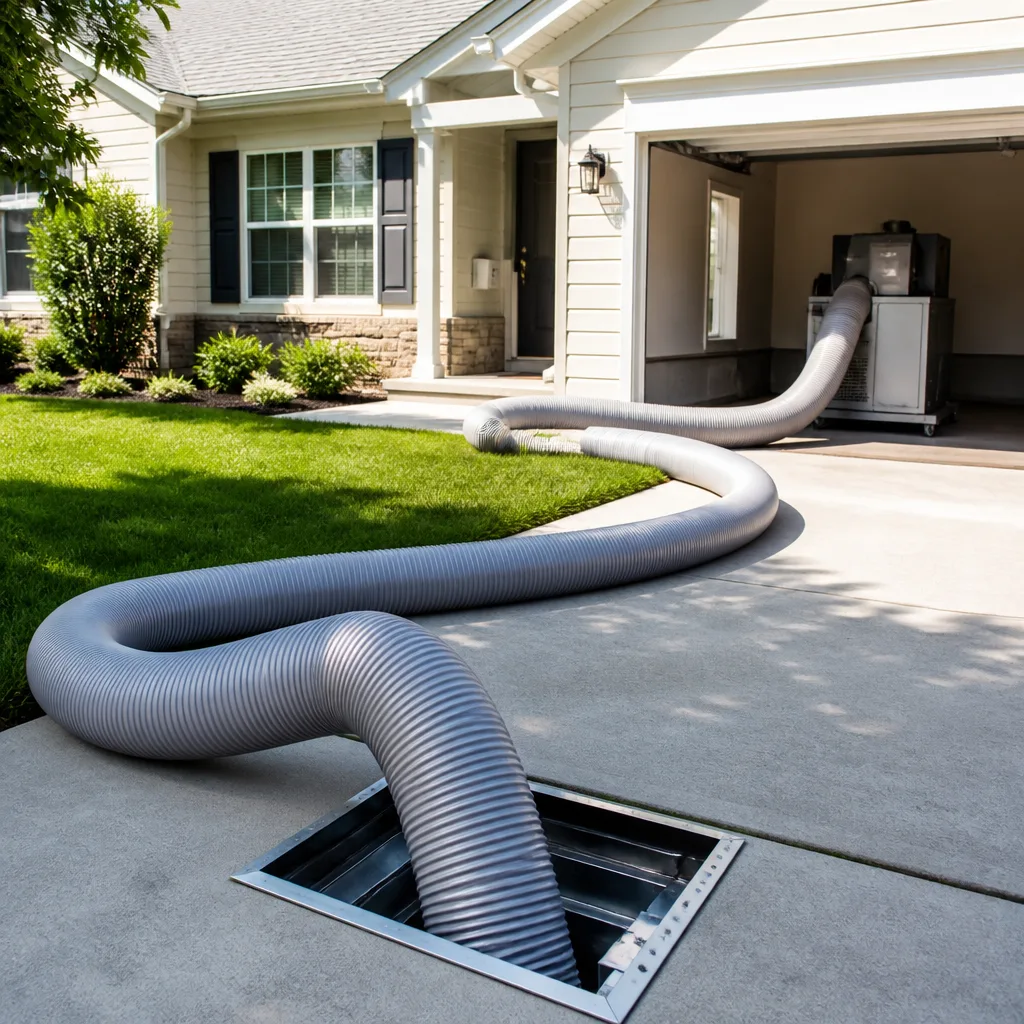 Whole-home duct cleaning
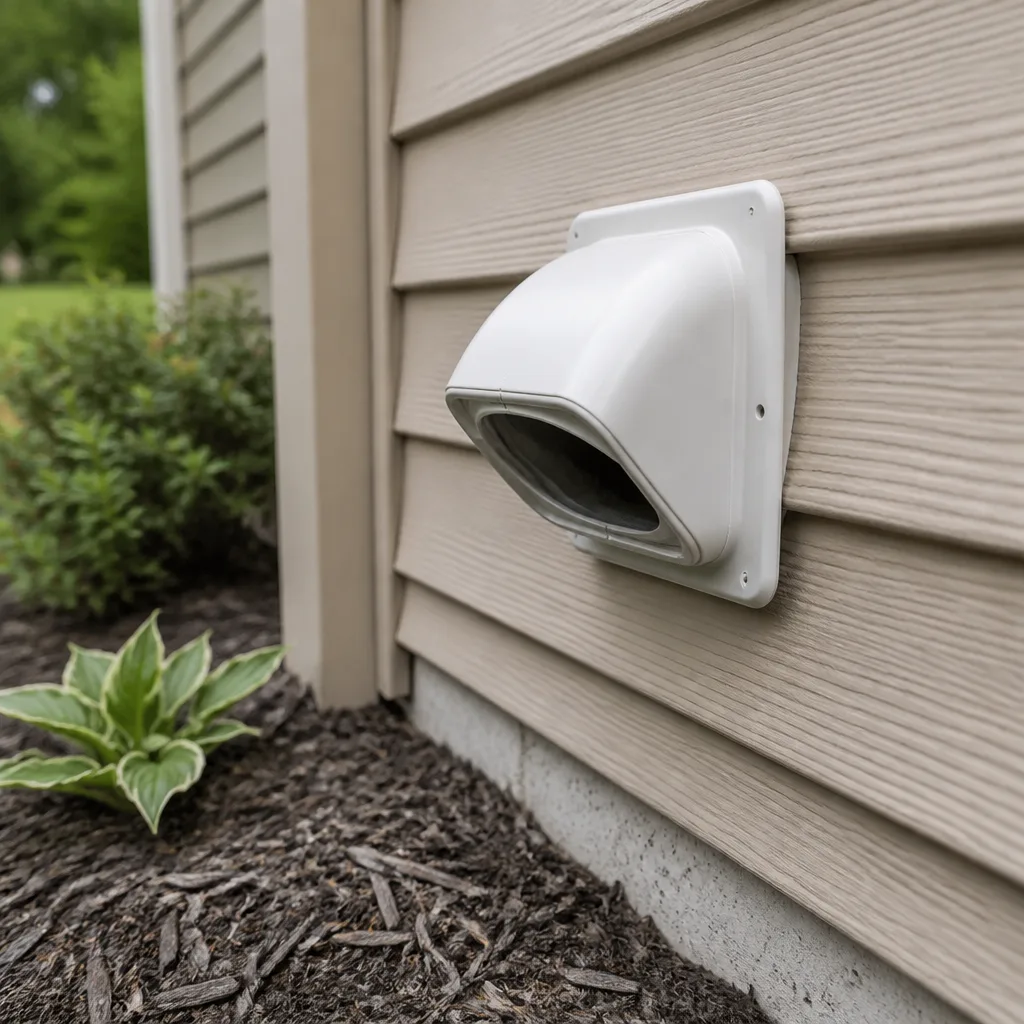 Dryer vent cleaning
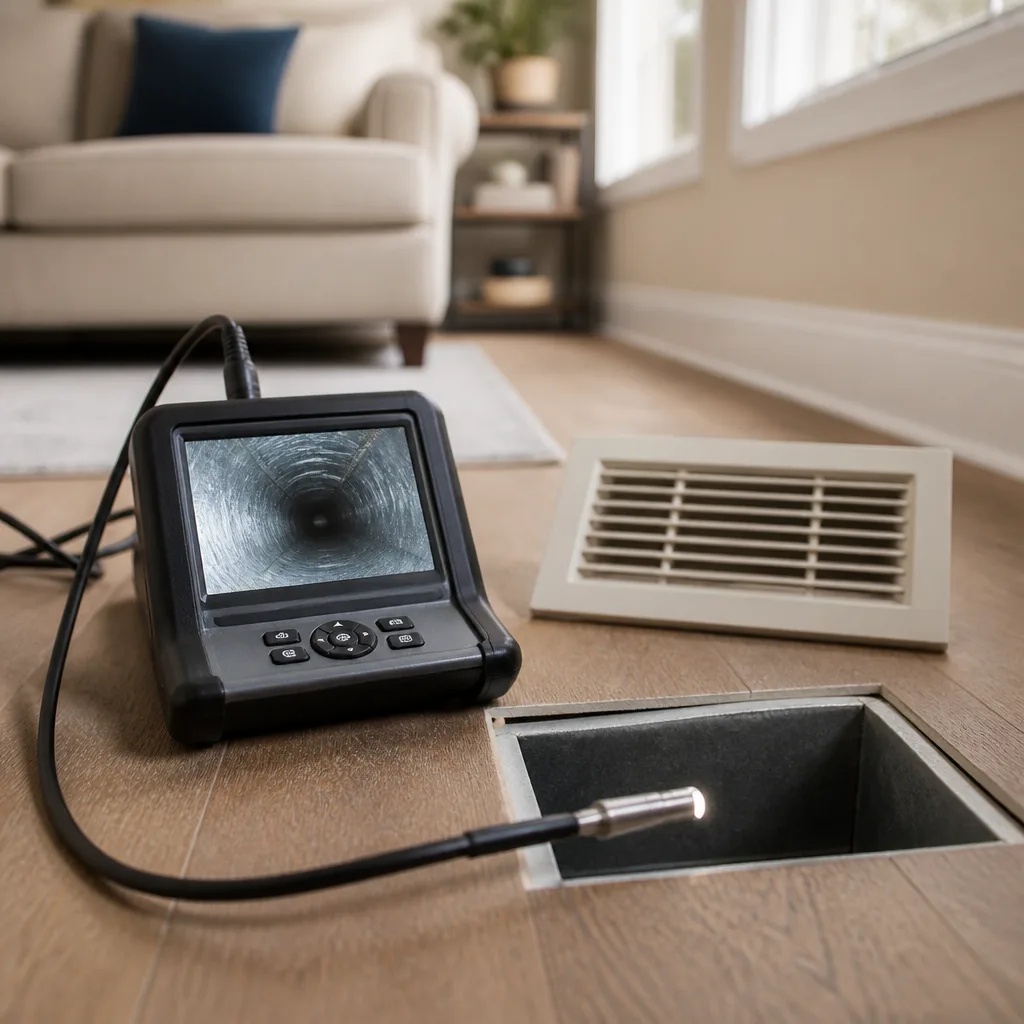 Camera inspection
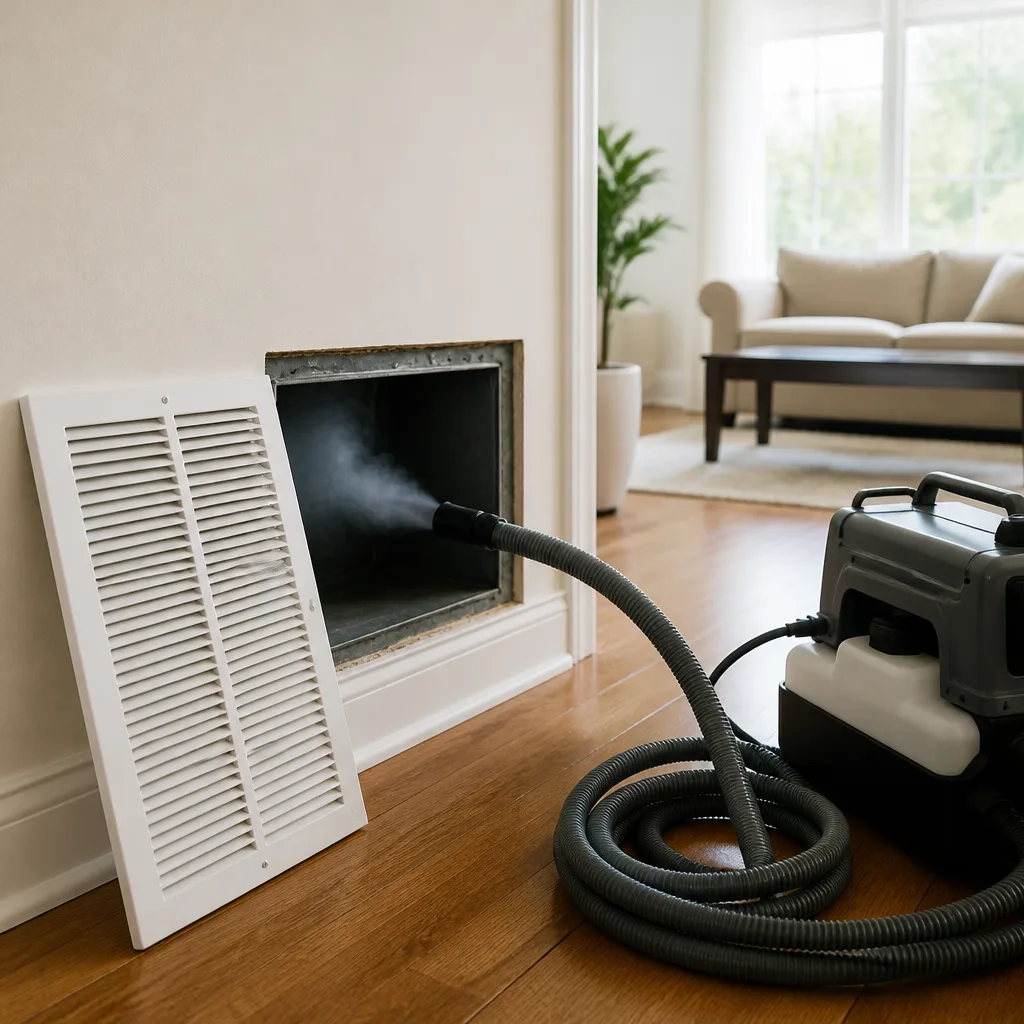 Sanitizing & deodorizing
Whole-system duct and dryer vent check with before-and-after photos - you see exactly what came out of your vents
That "$99 whole-house special" is a bait ad - the real number appears once they are in your hallway, or the "clean" is a shop-vac at the register. We photograph the inside of your ducts before and after instead.
The Complete Guide to Air Duct Cleaning in North Hollywood
Most North Hollywood homeowners don’t actually have a dust problem. They have a system problem. The ducts buried in attics and crawlspaces across this part of the San Fernando Valley behave differently than ducts anywhere along the coast, and treating them like they’re in Santa Monica is exactly how you end up with a “clean” system that’s coated in particulate again before the season changes. This guide explains what’s actually happening inside North Hollywood ductwork, why local heat cycles make contamination worse here, what separates a real source-removal clean from a van-and-vacuum show, and how to verify the work was done properly before the technician packs up and leaves.
Quick Answer
Air duct cleaning in North Hollywood means removing the accumulated particulate, debris, and contamination that builds up faster here because of San Fernando Valley heat, Santa Ana wind events, and older housing stock with aging duct materials. A proper job uses negative-pressure source-removal equipment, not a shop vac shoved into a register, and should include visual verification of the duct interior before and after. The honest price range for a full-system clean in this market runs roughly $400 to $900 depending on home size and system complexity, with the written estimate setting the final number before any work begins.
Styles & brands we work with
- Whole-home duct cleaning
- Dryer vent cleaning
- Camera inspection
- Sanitizing & deodorizing
Table of Contents
- Why North Hollywood Ducts Get Dirtier Than Coastal LA
- Source Removal vs. Van-and-Vacuum: What Actually Happens
- Pre-1980 Homes, Flex Duct, and Asbestos-Era Protocols
- Negative Pressure Equipment and What It Means for Ranch-Style Homes
- How to Read Post-Cleaning Verification Like a Pro
- What Air Duct Cleaning Costs in North Hollywood
- Why Dryer Vent Cleaning Belongs in the Same Conversation
- When Duct Repair Is the Real Fix, Not Another Cleaning
Why North Hollywood Ducts Get Dirtier Than Coastal LA
North Hollywood sits in a thermal basin. That’s not a figure of speech. In summer, attic temperatures in this part of the Valley regularly exceed 160°F, and that heat changes how particulate behaves. Dust, pollen, and fine debris don’t just settle in ducts here. The heat bakes them into the duct lining, especially in flex duct and older fiberglass-lined sheet metal. By the time air moves through the system, what started as loose dust has become a semi-adhered layer that a light brushing won’t remove. This is why a standard clean that works fine in Marina del Rey underdelivers in the 91601 and 91606 ZIP codes.
Then there are the Santa Ana winds. When they blow through the Valley, they carry fine desert particulate across the basin and push it into every intake, crack, and seam in a home’s envelope. Homes in Valley Village, Toluca Lake, and the NoHo Arts District all share the same exposure profile. What settles inside the return ducts isn’t just household dust. It’s a mix of outdoor windblown particulate, pet dander, and whatever the home’s own foot traffic has kicked up, all concentrated by a system that runs harder in Valley heat than coastal systems ever need to.
Wildfire smoke adds another layer. During smoke events, outdoor air drawn into the HVAC system carries combustion byproducts and fine particulate that coat the return side of the ductwork. That residue doesn’t leave on its own. It sits there until it’s mechanically removed, and every subsequent airflow cycle sends traces of it back into the living space. A homeowner who cleans their ducts after a smoke season and a homeowner who waits a year are often dealing with two very different contamination profiles.
The point is that North Hollywood duct contamination is cumulative and climate-driven. A one-time clean can absolutely restore a system, but understanding why the ducts got dirty in the first place matters for what you do next. North Hollywood homes aren’t unique in having dirty ducts. They’re unique in how fast they get that way.
Source Removal vs. Van-and-Vacuum: What Actually Happens
The NADCA standard for air duct cleaning is source removal. That means the debris is dislodged from the duct walls mechanically and then extracted under negative pressure so it leaves the building entirely. There’s a reason that standard exists. Anything short of source removal is, at best, agitation and, at worst, theater.
Most low-bid operations in the Valley run a different approach. They bring a portable vacuum, often a consumer-grade unit, connect it to one register, and push a brush through a few runs of duct. The visible dust around the nearest registers gets pulled out. The rest gets disturbed, suspended, and left to redistribute through the house or settle back into the ducts once the system cycles back on. The customer sees a clean register and assumes the job is done. The ducts are often dirtier than before the crew arrived because the agitation broke up a settled layer that was previously doing no harm.
Source removal works differently. A professional setup seals the system under negative pressure before any brushing begins. The extraction unit, whether a portable Nikro HEPA system or a truck-mounted platform, maintains continuous suction at the point of extraction. The agitation tooling, in our case Rotobrush contact-cleaning systems, dislodges debris at the duct wall surface while the vacuum captures it immediately. Nothing is recirculated into the home because nothing is given a chance to escape into the air stream. The particles are captured at the source and contained in the filtration unit until disposal.
Here’s a step-by-step of what a proper source-removal clean looks like:
- System inspection and pressure testing to identify leaks, restrictions, or damage before cleaning begins.
- Sealing of all supply and return registers to establish negative pressure across the entire duct system.
- Connection of the HEPA extraction unit to the main trunk line, creating continuous airflow that pulls toward the vacuum.
- Mechanical agitation of each branch run using contact-cleaning tooling that reaches the duct wall, not just the air in the middle of the duct.
- Removal of register covers and cleaning of each boot and return box at the point where air enters and exits the living space.
- Post-cleaning inspection with visual verification of each run before the system is resealed for normal operation.
This is the difference between cleaning a system and cleaning a symptom. In North Hollywood, where duct contamination compounds seasonally, the distinction is the difference between six months of relief and five years.
Pre-1980 Homes, Flex Duct, and Asbestos-Era Protocols
A meaningful share of North Hollywood housing stock predates 1980, and some of it predates 1960. Those homes often have duct systems that are still original or have been patched together over decades of remodels. That matters for duct cleaning because the protocol changes depending on what the ducts are made of.
Older rigid ductwork was frequently insulated with asbestos-containing materials, especially at the boots, joints, and transition collars. If that material is intact and undisturbed, it poses no immediate hazard. If a cleaning technician hits it with aggressive rotary brushes, it can be damaged, and a safe-in-place situation becomes a contamination event. The correct approach for these systems is deliberate tooling selection, lower contact pressure, and an experienced eye for identifying materials that need to be treated as ACM, or asbestos-containing material, until proven otherwise. Not every older duct has asbestos. But every older duct deserves the respect of being checked before it’s scrubbed.
Then there’s flex duct. A lot of North Hollywood homes built or remodeled from the 1970s onward use flex duct runs that are well past their service life. Flex duct degrades. The inner liner gets brittle, the insulation breaks down, and in a 160°F attic, that deterioration accelerates. A common failure is a collapsed or torn inner liner that lets attic air, insulation fibers, and whatever lives in the attic directly into the conditioned air stream. Cleaning across a torn liner won’t fix the problem. It may make it worse by pushing debris through the tear. This is where air duct cleaning and duct repair need to be considered together, not as separate silos.
The same applies to older returns that have been pulling air from unfinished crawlspaces or attics for decades. If the return path is compromised, the clean is compromised. A real system intervention starts with identifying those breaches and closing them before spending time and money on cleaning the downstream runs.
Negative Pressure Equipment and What It Means for Ranch-Style Homes
North Hollywood is dominated by single-story ranch-style homes with long horizontal duct runs, tight crawlspaces, and attic systems that see extreme heat swings. That physical layout has a direct effect on how well different cleaning approaches work.
Truck-mounted negative pressure systems have real advantages in certain settings, principally raw extraction power over long trunk lines. But truck-mounted platforms are often overkill for a ranch-style home where the runs are shorter and the system is accessible from the attic or crawlspace. Portable high-efficiency systems, when built to contractor specifications, deliver the same negative-pressure performance with better access in tight spaces. The equipment that matters in a North Hollywood attic is a system that maintains consistent suction while the agitation tooling is working, not just a big motor in the driveway.
Nikro portable HEPA systems are common in restoration settings for exactly this reason. They filter at 0.3 microns, which means the fine particulate common in Valley homes, wildfire smoke residue, pet dander, and degraded flex duct fibers, is captured in the filtration train rather than exhausted back into the attic air. A consumer shop vac doesn’t come close. A contractor-grade portable system paired with Rotobrush contact-cleaning tooling gets into the duct wall itself, which is where the adhered layer lives in this climate.
For the homeowner, the equipment conversation should be specific. Ask what extraction unit is being used and what its filtration rating is. Ask whether the agitation is contact-cleaning or just air-whip. Ask where the extraction unit will be located and how the system will maintain negative pressure across the entire run. If the answer is vague, the job will be vague too. We run Rotobrush contact-cleaning systems with Nikro HEPA extraction on our North Hollywood jobs because those platforms match the physical conditions here: long runs, tight access, fine particulate, and heat-aged duct materials.
How to Read Post-Cleaning Verification Like a Pro
The single most important question you can ask a duct cleaning company is not about price. It’s about what they show you before they leave your property. If the answer is a verbal “looks good,” you haven’t had verification. You’ve had reassurance, and those aren’t the same thing.
Post-cleaning verification should be visual and specific. Before work begins, the technician should inspect the interior of each major run, usually with a flexible borescope or similar inspection camera, and document the baseline. After cleaning, the same inspection should be repeated in the same runs. You should see the same duct surfaces before and after, and the difference should be obvious. A technician who won’t show you the interior of your ducts before and after isn’t doing verification. They’re doing a service call.
Here’s a numbered checklist you can run through when the technician says they’re done:
- Ask to see the inspection footage from before the clean. It should show visible debris buildup and the condition of the duct walls.
- Ask to see the same runs after the clean. The duct wall should be visible and clear of the adhered layer that was there before.
- Ask which tooling was used on each run. Contact-cleaning tooling leaves a different finish than an air whip, and you should know which you paid for.
- Ask about the extraction unit’s filtration rating. If they can’t tell you the micron rating, that’s a signal the unit isn’t a professional HEPA platform.
- Check the registers and boots yourself. A real clean includes the points where air enters and exits the living space, not just the trunk line inside the attic.
- Ask about any findings: torn flex liner, poor connections, evidence of return-side leakage. A professional will document those and flag them for repair, not clean around them.
A company that uses contractor-grade equipment and documents its work will show you the system, not just the invoice. That’s the standard you should hold for a North Hollywood home, where the duct system is under more environmental stress than almost anywhere else in LA County.
What Air Duct Cleaning Costs in North Hollywood
North Hollywood pricing for a full-system air duct cleaning typically lands between $400 and $900 for most single-family homes. Smaller condos and townhomes in the NoHo Arts District or near Valley Plaza can come in lower, while larger homes with multiple zones or heavily contaminated systems can exceed that range. The price is set per job by a written estimate, and that estimate should be free.
Here’s a typical cost breakdown by scope:
- Basic single-system clean (1,200 to 2,000 sq ft): $400 to $600
- Larger single-story ranch with long runs (2,000 to 3,000 sq ft): $600 to $800
- Multi-zone or two-system homes: $750 to $900+
- Dryer vent cleaning as an add-on or standalone: $125 to $250
- Duct repair work (torn flex liner replacement, failed connections, boot repair): quoted separately based on access and materials
These are honest ranges for a source-removal clean using professional negative-pressure equipment. If someone quotes you $99 for a whole-house clean, read the fine print, because what follows the $99 is usually a pressure-based upsell where the real invoice lands at $900 or more. The $99 number is a lead generation tool, not a service price. The industry’s bait-and-switch reputation in this city is earned, and a flat price per system, agreed before work starts, is the only real protection against it. Ask for the full written estimate upfront. If the company won’t provide one before the van shows up, find another company.
Why Dryer Vent Cleaning Belongs in the Same Conversation
Your dryer vent is part of the same ventilation pathway as your air ducts. It moves a different kind of air, but it shares the same failure profile: restricted flow, accumulated particulate, and escalating energy costs. In North Hollywood, where the air is dry and lint builds up fast, a clogged dryer vent is also a fire risk. The National Fire Protection Association has long identified dryer vent fires as a leading cause of residential fires, and the mechanism is simple: lint accumulates, airflow drops, heat rises, and the lint itself becomes the ignition source.
Dryer vent cleaning removes that lint load from the entire run, not just the accessible section behind the dryer. In many North Hollywood homes, the dryer vent runs through an attic, crawlspace, or interior wall chase, and the sections you can’t see are the ones that matter. A professional service uses a rotary brush and HEPA extraction to clean the full run and then verifies the airflow at the exterior termination point.
The practical argument for doing both services together is simple. If you’re already researching duct cleaning, your dryer vent is due for the same attention. They share the same contamination drivers and the same solution: mechanical agitation, negative pressure extraction, and verification. Your dryer vent is a fire risk. We treat it like one.
When Duct Repair Is the Real Fix, Not Another Cleaning
Some North Hollywood duct systems don’t need another cleaning. They need repair. A duct system that has a torn flex liner, a disconnected boot, or a failed joint is pulling attic air, crawlspace dust, or insulation fibers directly into the home. Cleaning that system is like washing the dishes while the sink is still overflowing. The debris comes right back because the system is compromised at the source.
Onyx Duct Cleaning offers air duct repair as a standalone service because we see this pattern constantly across the Valley. A homeowner calls about dust. A technician inspects and finds a flex duct collapsed in the attic heat, or a return pulling from an unconditioned space. The right fix is repairing the compromised section first, then cleaning the system so it starts fresh. Cleaning alone would have provided temporary relief at best.
The signs that repair may be the real issue include:
- Persistent dust in the home even after a recent cleaning
- Rooms that never reach the same temperature as the rest of the house
- Visible condensation or staining around register boots
- Higher energy bills with no change in usage patterns
- Attic air smells coming through the registers when the system cycles on
A professional inspection will find the specific point of failure and give you a repair scope before recommending a clean. We clean what’s in your ducts. We also fix what’s wrong with them. That’s the difference between treating a symptom and solving a system problem.
Common Mistakes to Avoid
- Paying for a clean without an inspection first. A company that quotes over the phone without seeing the system doesn’t know what they’re cleaning. The written estimate should be based on a real look at the ducts, not a square footage guess.
- Falling for the $99 whole-house special. That price is a door opener, not a service price. The actual invoice almost always comes in several times higher once the van is in the driveway and the upsell begins.
- Assuming all flex duct can be cleaned safely. Brittle or degraded flex liner in a hot North Hollywood attic may tear under aggressive tooling. The right approach is inspection first, tooling selection second, and repair where the liner is already gone.
- Skipping the dryer vent because it’s a “different service.” The dryer vent and the duct system share the same contamination drivers and the same risk profile. Doing one without the other leaves a ventilation vulnerability unaddressed.
- Accepting a verbal “it’s clean” without visual proof. If the technician can’t show you before-and-after footage of the same runs, you haven’t verified anything. You’ve paid for a claim.
- Cleaning a system that actually needs repair. A compromised duct will get dirty again within months. Fix the breach first, then clean the system. Otherwise you’re paying for the same job twice.
- Choosing a company based on price alone. North Hollywood’s climate is harder on ducts than most of LA. A cheap clean on a system that needs real source removal is a wasted clean.
See the difference
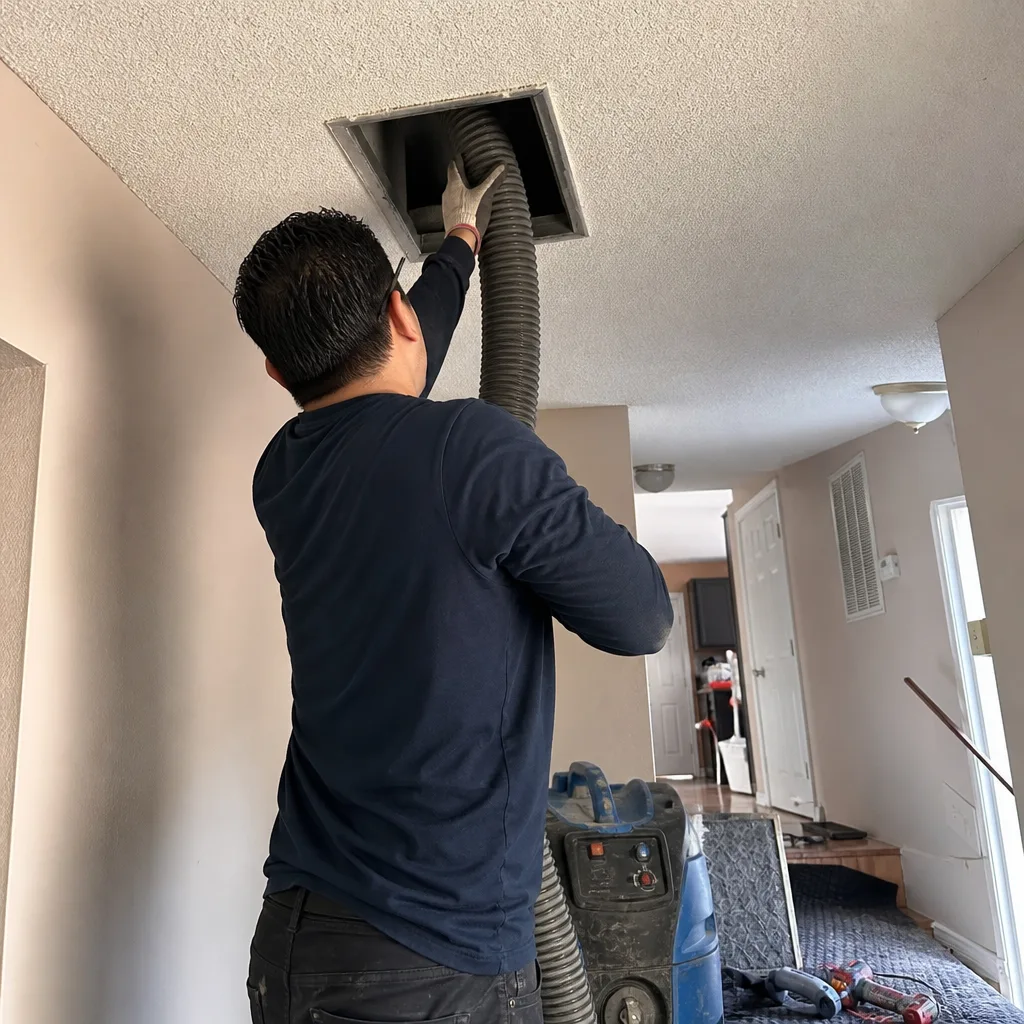 Before
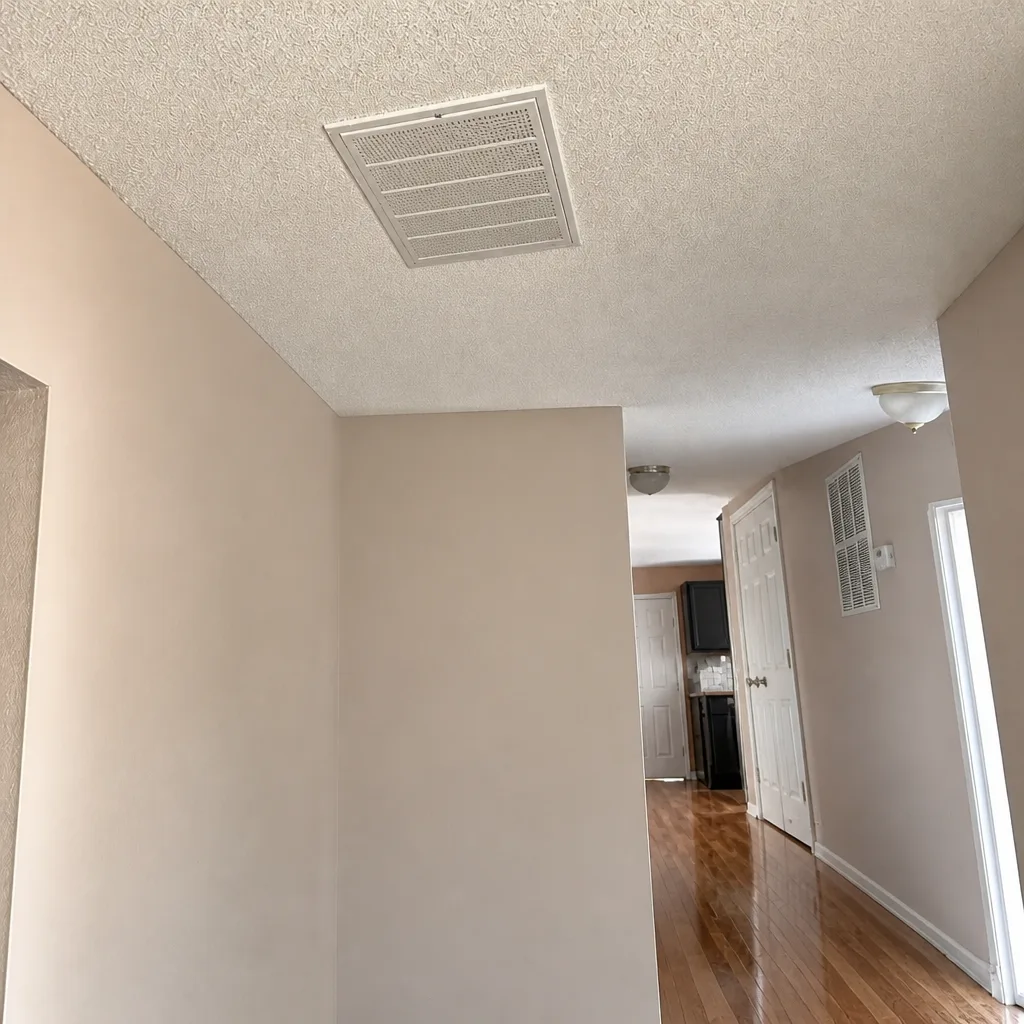 After
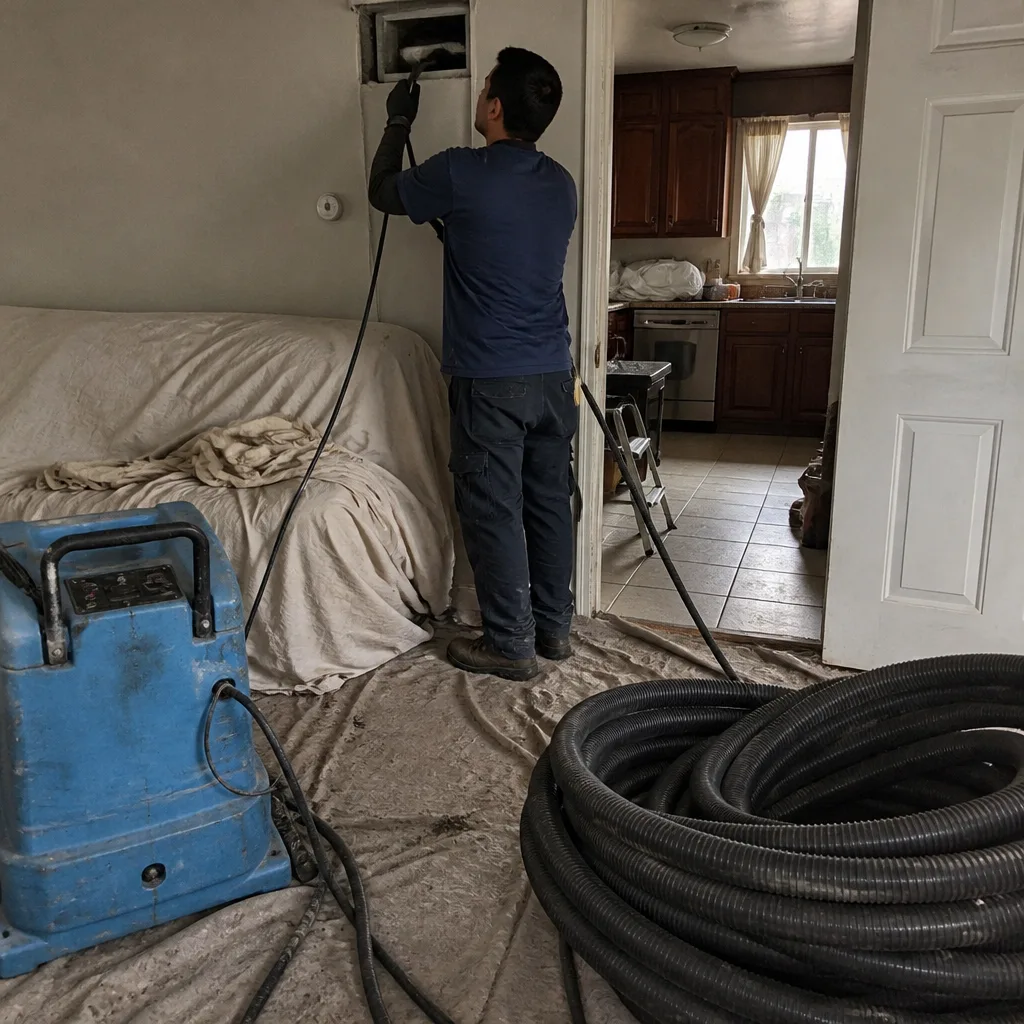 Before
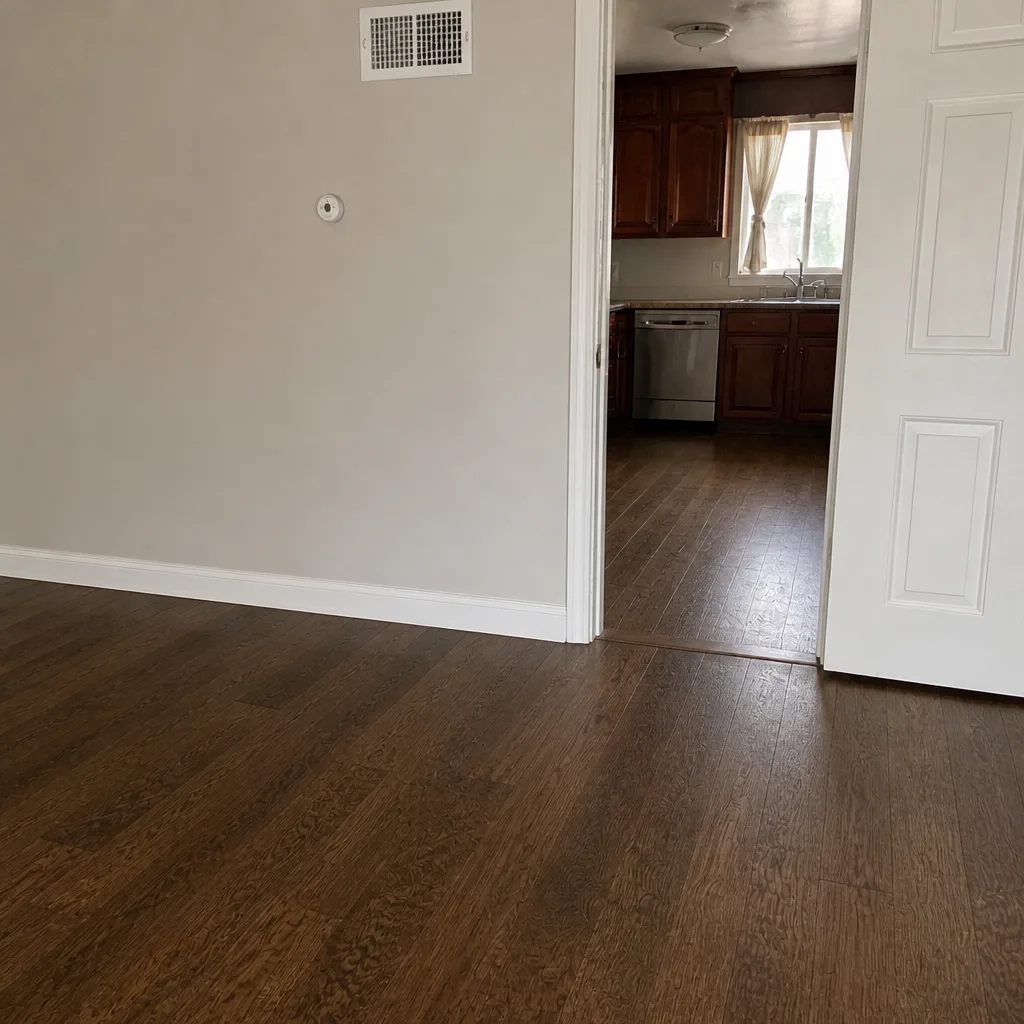 After
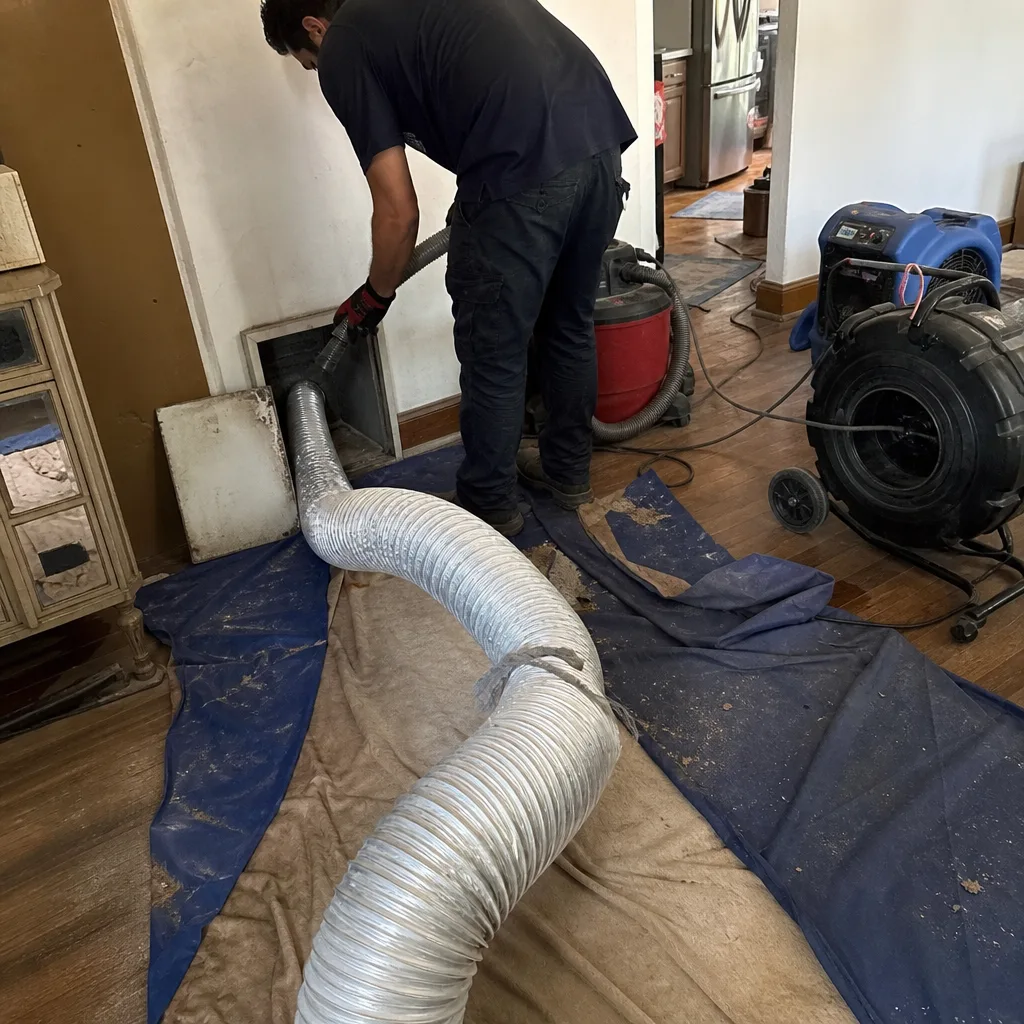 Before
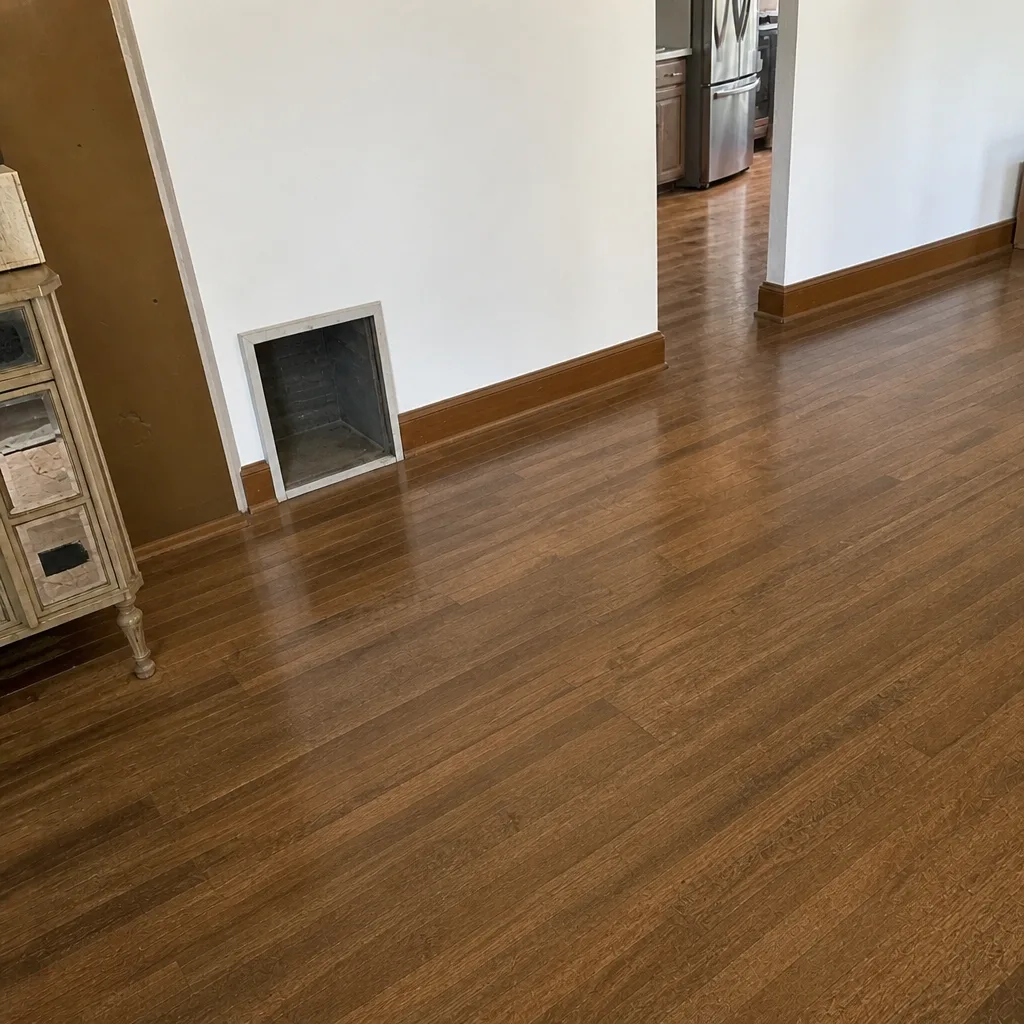 After
When to Call a Professional
Call for a duct cleaning when you can see dust accumulating around your registers within days of cleaning them, when your home has had recent renovation work without sealed ducts, when wildfire smoke drifted over the Valley during the last event, or when someone in the home has unexplained allergy symptoms that improve away from the house. Call for an inspection if you’ve never had the system looked at since moving in, especially in a home built before 1980 where the duct materials may be anything from brittle flex to asbestos-era insulated steel. Call for repair if rooms never reach temperature or the dust returns within weeks of a previous cleaning. Onyx Duct Cleaning offers free estimates in North Hollywood. Call (833) 589-9715 for a real inspection and a written scope before any work is quoted.
Frequently Asked Questions
A full-system air duct cleaning in North Hollywood typically costs $400 to $900 for most single-family homes, depending on system size, accessibility, and contamination level. The written estimate sets the final price before work starts, and any company quoting $99 for a whole house is using a lead-generation price, not a real service quote. Call (833) 589-9715 for a free estimate based on an actual inspection.
Cheaper quotes usually mean a different service. A low-bid operator with a portable consumer vacuum is doing agitation and partial extraction, not source removal, and the debris they leave behind often resettles in the ducts or blows back into the home. The cost difference reflects the equipment, the filtration, and the amount of time spent on each run. A real source-removal clean uses contractor-grade negative pressure and contact-cleaning tooling, and it costs real money because it takes real time.
Ask for visual verification. A professional should show you inspection footage of the same duct runs before and after the clean, with the duct wall visible and the difference obvious. If the company won’t show you the interior of your ducts before and after, the work hasn’t been verified, and you should treat the clean as unproven.
Yes, and in many cases it’s more important because older North Hollywood homes have degraded flex duct, compromised returns, or asbestos-era materials that need a more careful protocol. The duct system in an older home has had decades to accumulate contamination and develop leaks. A proper cleaning paired with an inspection and any needed repairs restores the system instead of just polishing what’s left of it.
Every 3 to 5 years is a reasonable baseline for most Valley homes, but the faster answer is that homes exposed to wildfire smoke, Santa Ana wind events, renovation dust, or pets with heavy shedding may need attention every 2 to 3 years. The thermal cycling in a North Hollywood attic drives particulate into the duct lining faster than coastal systems experience, so the contamination timeline here is accelerated.
Yes. Dryer vent cleaning is one of our three core services alongside air duct cleaning and air duct repair, and in most homes the dryer vent is the more urgent fire risk of the two. We clean the full vent run from the dryer connection to the exterior termination point and verify airflow at the end. Call (833) 589-9715 for a free estimate on the whole ventilation pathway.
The Bottom Line
North Hollywood duct systems get dirtier faster than almost anywhere else in LA County because of Valley heat, Santa Ana winds, wildfire smoke, and aging housing stock. Cleaning those ducts properly means source removal with contractor-grade negative pressure equipment, verification before and after, and an honest assessment of whether the system needs repair before it needs cleaning. The price for that work is a real number, agreed in writing before the crew starts, not a $99 teaser that becomes a $900 invoice in the driveway. Onyx Duct Cleaning runs Rotobrush contact-cleaning systems and Nikro HEPA extraction, offers duct repair as a standalone service, and works on the full ventilation pathway in North Hollywood. The same equipment restoration crews trust, at residential pricing. Call (833) 589-9715. We answer 24/7. Fast dispatch from 7am to 7pm, Sunday through Friday.
Written by the team at Onyx Duct Cleaning, serving North Hollywood since 2013.